A factory in a container still waits for the grid
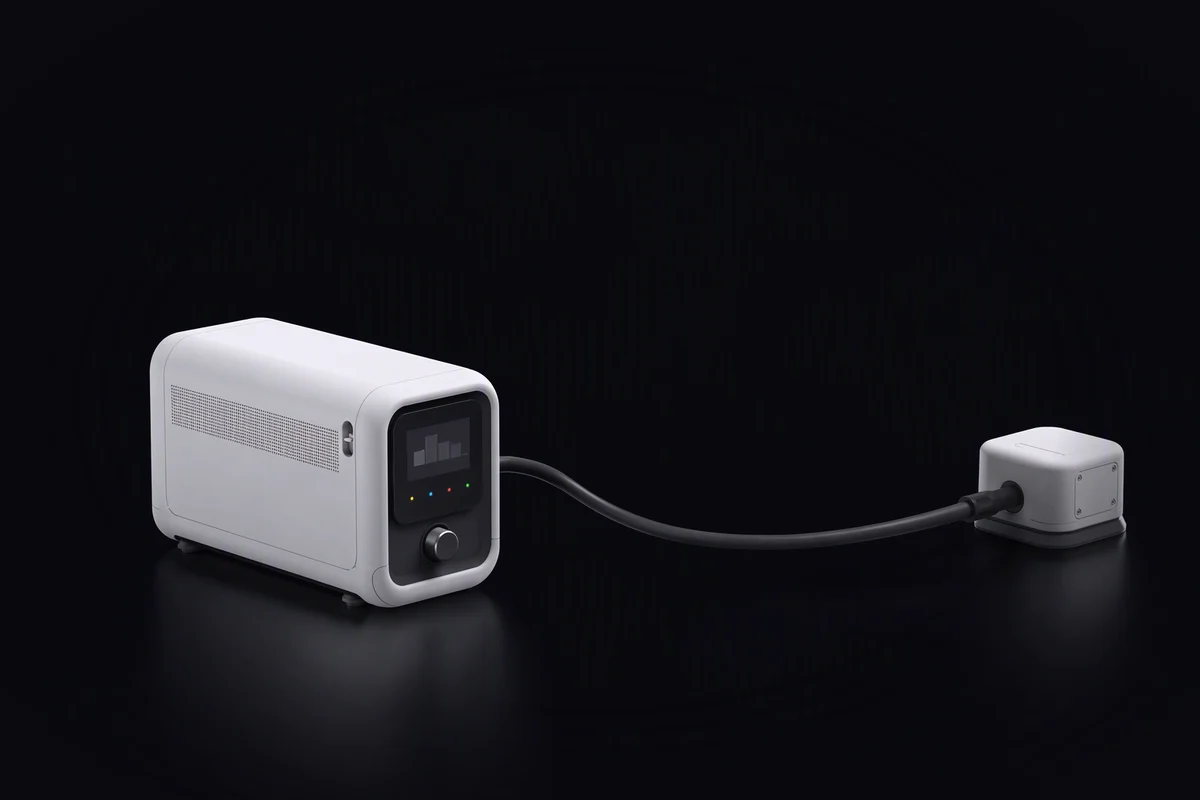
Imagine a regional company that wants its own compute site. It has land next to an industrial park, a budget and a plan. The plan used to say: half a year of construction, then commissioning. Now a vendor says the hall can arrive as containers, integrated and tested at the factory, and be running in two weeks. The plan shrinks on paper. Then someone asks the grid operator when the plot can draw the power the containers need, and the answer is not measured in weeks.
The story is hypothetical. The two numbers in it are not.
The real cause: construction was never the slowest part
On 21 October NVIDIA introduced DSX POD, a reference design for complete compute factories on its Vera Rubin platform, which it calls AI factories. Partners build them as modular containers with compute, networking, cabling, rack power and liquid cooling inside, integrated and tested before delivery. NVIDIA says that on a prepared site, with power, water and network already there, installation drops from about six months to as little as 14 days. Deliveries are planned from early 2027, with 17 partners named, among them Dell, HPE, Lenovo, Schneider Electric and Vertiv.
That is a real improvement, and the condition matters as much as the number: a prepared site. Analysts at Futurum made the point directly: in Europe the binding constraint is access to power from the grid, and DSX POD does not change that. A factory that installs in two weeks still waits as long as the connection takes.
So the container does not move the bottleneck. It removes everything in front of it, which makes the bottleneck easier to see. Where compute can be built is decided by where energy can be had. That is the argument of compute follows energy, and DSX POD is a clean piece of evidence for it.
How compute planning goes wrong
Counting build time instead of connection time. A schedule that starts with the hall and ends with commissioning leaves out the step that takes longest. The power connection is the critical path, and it is the one nobody on the project controls.
Choosing land before choosing power. A plot is cheap to find. A plot with spare capacity on the local grid, and water for cooling, is not. Treating the second as a detail to sort out later is how projects stall after the groundworks.
One big site behind one big connection. Concentrating capacity means asking one grid point for a very large amount of power at once. The larger the request, the longer the queue and the fewer the places that can say yes.
Treating all work as urgent. A factory sized for peak demand runs flexible batch work at the most expensive hour. Most jobs can wait a few hours and would happily run wherever power is spare.
Confusing the output with the accounting. Jensen Huang put it as a factory creating value when it produces tokens, not when construction ends. In his sense a token is a unit of model output, the product. That is a fair way to describe a factory. It is not a reason to let the output decide where the factory should stand.
What KyberFusion does instead
KyberFusion is pre-launch. It does not compete with a Vera Rubin factory, and a node on a shelf will not train a frontier model. It is built for the work that does not need one place.
Go where the power already is. Homes with solar panels, offices with a connection sized for a busier past, server rooms with headroom. None of them needs a new grid connection to run one more node. A KyberDeck node that is idle can lend spare capacity, as described in from a node on your shelf to a node in the network and in the home node.
Let work say how flexible it is. A job states its deadline, the hardware class it needs and the jurisdiction it must stay in. Then the network places it where electricity is available, instead of where the biggest building happens to be.
Keep hard limits above price. Jurisdiction, deadlines and latency for anything a person is waiting on are not traded for cheaper power.
Use tokens for the accounting. In KyberFusion a token means something different from a model’s output: it is a unit of settlement for compute, recording who contributed capacity and who used it. The token is the accounting, not the product explains why it has to stay that way. Tokens are planned, and we are analysing them under EU law before anything goes live. This is not an offer, and a token promises no return or price.
For a company deciding whether to borrow capacity at all, KYBERTIS has a plain guide: when to borrow from KyberFusion, and when not.
Large factories still matter. Poland has two public ones under EuroHPC, PIAST in Poznań and Gaia in Kraków. A distributed network is the layer next to them, for the work that can move.
A test you can run today
For a company: find your contracted connection capacity on the electricity contract, then the highest demand on your bills for the last year. The difference is power you already pay to have available and rarely use.
For a household: look at your meter or your inverter’s app and note the hours when you export power or use almost none.
Then list the SI work you run, or plan to, and mark each job: must answer now, or can finish by tomorrow morning. Every job in the second column could run in those hours, on power that already exists. More about the network is on the homepage.
- energy
- grid
- DSX POD
- siting
- settlement